January 23rd, 2015 by Guest Commentator

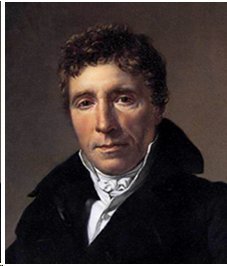
by E. J. Sieyes
Le Tiers Etat, 1789, posed the question “What is a nation?†stating that its essence was a single, collective body of people, living under a single common law, and represented by one legislature. This writing advanced the thoughts of Voltaire and the principles of democratic government so recently obtained in North America. In the monarchical, feudal government that was France at that time, there was the nobility, a privileged class that set itself apart from the great mass of the citizenry. The nobility isolated themselves from the people by their wealth, manipulating the government to their own ends, enacting provisions for their own benefit, and exempting themselves from those laws regulating the lives of the citizen. The wealthy, privileged nobility we called the Second Estate, owned the government and corrupted its processes to amass even greater wealth at the expense of the citizenry.
Read the rest of this entry »
Posted in Opinion | No Comments »
November 3rd, 2014 by Darin Robbins

A voter appeal for Howie Hawkins for Governor.
As we enter the last few days of this election season, I believe that it is vitally important to remind everyone of the political dynamics behind the Howie Hawkins for Governor campaign. Now more than ever, we need people like Howie Hawkins to really represent the 99% of New York and make this a state that works for all of its residents. Our current political and economic situation is one where Wall Street, oil companies, and the big banks control not only our state legislature but the Governor’s office as well. Andrew Cuomo is just as much a servant to the 1% as any Republican found in the state, thus starkly demonstrating that there is no real substantial difference between the two major parties. In fact, our current Governor is most likely to allow the dangerous practice of fracking in New York after this election if he wins another term. Therefore, there needs to be an alternative to the status quo. An alternative that bans fracking, fully funds public education, and makes sure that New Yorkers are able to earn a living wage. We are at a tipping point, and that is why we need Howie Hawkins, the Green Party, and the Green New Deal platform now more than ever.
Read the rest of this entry »
Posted in Opinion | No Comments »
August 2nd, 2014 by Darin Robbins
Draft of a potential TEDx talk.
In order to succeed, economic democracy has to be more than worker owned businesses. It must be comprehensive and include the four factors of labor, money, resources, and technology because those factors are vital for a functioning economy. And all of these factors must be considered in order to put forward an alternative. Economic democracy is the combination of these parts in a positive synergy. When these factors work together, solutions to immediate problems are met. A working model of a new type of economy is created. There is the tools necessary for the expression of the individual and collective desires of a society. Most importantly, economic democracy is the ability to practice real autonomy and self-determination to its fullest extent. The result is both inclusion and independence, which is the heart of democratic action.
Read the rest of this entry »
Posted in Opinion | No Comments »
 Posts
Posts